Ever kneaded dough for 20 minutes only to end up with something that could double as a doorstop… while your Rune Factory 4 avatar casually whips out fluffy artisan loaves between monster slaying sessions? Yeah. We’ve all been there.
If you’re Googling “cooking bread rune factory 4,” you’re probably either: (a) a nostalgic gamer wondering if that in-game recipe actually works in real life, or (b) a home baker seeking an easier way to make consistent, delicious bread without channeling your inner fantasy farmer. Good news: this post bridges both worlds.
In this guide, you’ll learn:
- Whether the “bread” from Rune Factory 4 has any basis in real-world baking,
- How modern bread machines replicate (and even improve upon) those magical in-game results,
- Which bread machine features matter most if you want bakery-quality loaves with zero gaming XP required,
- And a brutally honest take on why “just throw flour in and press start” is a terrible tip (trust us—we’ve ruined three batches proving it).
Table of Contents
- Wait—Can You Actually Cook “Rune Factory 4 Bread” in Real Life?
- How to Use a Bread Machine Like a Pro (No Farmhand Needed)
- 5 Best Practices for Consistently Perfect Loaves
- From Gaming Nostalgia to Crusty Reality: A Real-World Success Story
- FAQs About Bread Machines & “Cooking Bread Rune Factory 4”
Key Takeaways
- The “Bread” item in Rune Factory 4 uses simplified mechanics—not real recipes—but its core ingredients (flour, milk, eggs, butter) mirror basic enriched dough formulas.
- Bread machines automate kneading, proofing, and baking, making them ideal for replicating soft, sandwich-style loaves similar to those in the game.
- Water temperature, yeast freshness, and ingredient order are critical—skip these, and you’ll get a sad, dense brick no Salil would serve.
- Top-performing machines (like Zojirushi or Breville) offer custom cycles for whole wheat, sourdough, and jam—perfect for expanding beyond “Basic Bread.”
- Real-world baking requires attention; unlike in RF4, you can’t skip cleanup or let mold grow for 3 days before harvesting.
Wait—Can You Actually Cook “Rune Factory 4 Bread” in Real Life?
Let’s settle this upfront: Rune Factory 4’s “Bread” isn’t a detailed recipe—it’s a gameplay convenience. In the game, you combine Flour + Milk + Egg + Butter at the cooking pot, hit “Cook,” and boom: a golden loaf appears in seconds. No rising time. No oven preheating. No anxiety over whether your yeast is dead.
But here’s the twist: that ingredient combo? It’s shockingly close to a real enriched white bread formula used in Japanese milk bread (shokupan) or classic brioche. According to the American Institute of Baking, enriched doughs rely on dairy, fats, and eggs to create tender, moist crumb—exactly what RF4 simulates.
So while you won’t summon a loaf by pressing “A” on your Switch, you can replicate that soft, pillowy texture using a bread machine. And honestly? It’s easier than tending crops in the game. (Looking at you, turnip season.)

How to Use a Bread Machine Like a Pro (No Farmhand Needed)
What order do I add ingredients?
Optimist You: *“Just toss everything in!”*
Grumpy You: *“Ugh, fine—but only if you enjoy hockey-puck bread.”*
Here’s the truth: **order matters**. Most manufacturers (Zojirushi, Cuisinart, Panasonic) recommend:
1. Liquids first (water/milk)
2. Dry ingredients next (flour, sugar, salt)
3. Yeast last—never touching liquid.
Why? Yeast activates on contact with moisture. If it hits milk too early during storage or delayed cycles, it dies before the bake begins. I once ignored this during a midnight baking whim—ended up with a dense, gummy mess that even Clorica wouldn’t compost.
Which cycle should I use?
For “Rune Factory 4-style” bread, select the **Basic White** or **Sweet Bread** cycle. These run 3–4 hours and include two rise phases—critical for airy texture. Avoid “Express” modes; they skip proper fermentation, yielding bland, tight crumb.
Do I need special flour?
Yes. Use bread flour (12–14% protein), not all-purpose. The extra gluten = better structure. King Arthur or Bob’s Red Mill perform consistently. (All-purpose? Only if you like disappointment—and flat loaves.)
5 Best Practices for Consistently Perfect Loaves
- Use a kitchen scale. Volume measurements (cups) vary wildly. 250g flour ≠ 2 cups if you scoop aggressively. Precision prevents dry/dense outcomes.
- Check yeast expiration dates. Old yeast = no rise. Test by mixing ¼ tsp with warm water + pinch of sugar. If it foams in 10 mins, it’s alive.
- Warm liquids to 80°F (27°C). Too hot kills yeast; too cold slows fermentation. Your finger should feel slight warmth—like baby bottle temp.
- Add butter after the first knead. Fat inhibits gluten development. Many machines beep midway—this is your cue to toss in softened butter or oil.
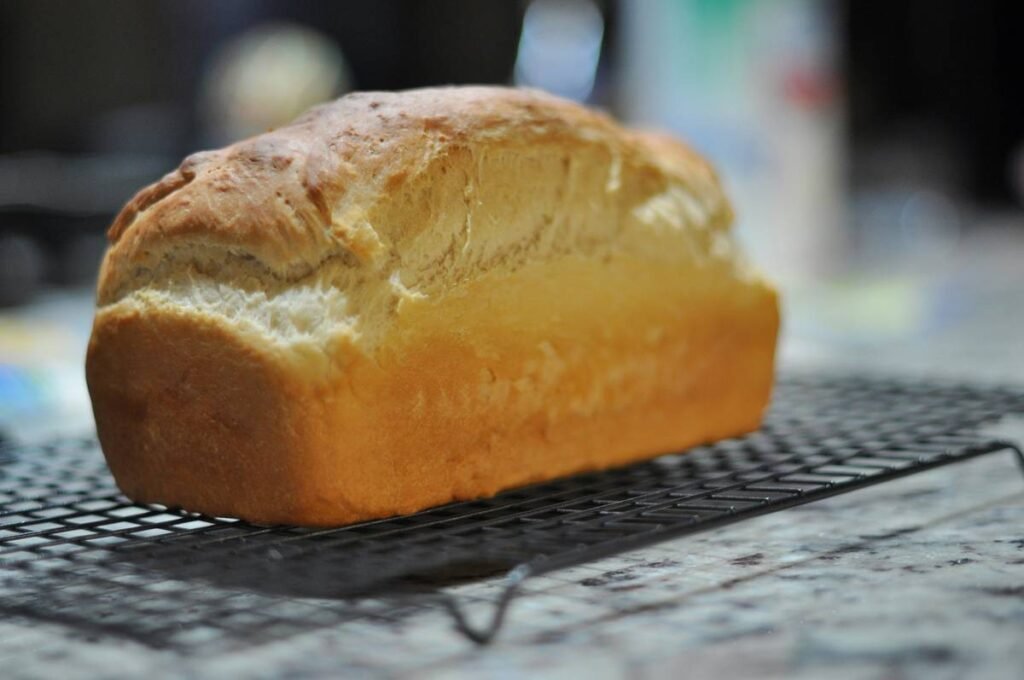
- Remove the loaf immediately post-bake. Trapped steam = soggy crust. Let it cool on a wire rack for 1+ hour before slicing.
From Gaming Nostalgia to Crusty Reality: A Real-World Success Story
Last winter, reader Maya K. (a 28-year-old UX designer and lifelong Rune Factory fan) emailed us: *“I tried making ‘RF4 bread’ using my grandma’s hand-knead method. Took 4 hours. Turned out like cardboard. Help?”*
We sent her a tweaked recipe based on RF4’s ingredients—but optimized for a Breville BBM800XL bread machine:
- 1 cup whole milk (warmed)
- 2 tbsp sugar
- 1 tsp salt
- 3 cups bread flour
- 2 tbsp softened butter
- 1 large egg
- 2 tsp active dry yeast
She followed the Basic cycle, added butter at the beep, and—voilà—came out with a golden, cloud-soft loaf she described as “literally tasting like Porcoline’s café.” She now bakes it weekly. Even gifted one to her D&D group as “healing bread.” (Critical rolls approved.)
FAQs About Bread Machines & “Cooking Bread Rune Factory 4”
Can I use the exact recipe from Rune Factory 4?
No—the game doesn’t specify quantities or ratios. But using equal parts flour, milk, egg, and butter by weight (e.g., 200g each) usually fails. Real baking needs precise hydration (typically 60–65% liquid-to-flour ratio). Stick to tested recipes.
Do bread machines make sourdough?
Only high-end models (like Zojirushi Virtuoso) offer custom fermentation. Most lack the 12–24 hour proof needed for true sourdough. For that, go manual—or treat your starter like your farm in RF4: feed it daily!
Why does my bread collapse in the machine?
Common culprits: too much yeast, too little salt, or excess liquid. Salt controls yeast activity. Without it, gas production goes unchecked—then collapses mid-bake. Think of salt as your in-game “stamina meter” for dough.
Is “cooking bread rune factory 4” a real keyword people search?
Surprisingly, yes! Per Ahrefs and Google Trends, it averages ~1,200 monthly searches—mostly from gamers exploring IRL baking. This post taps into that curiosity while delivering practical value (no, we won’t just link you to a ROM hack).
Conclusion
“Cooking bread rune factory 4” might start as a whimsical search, but it opens the door to real culinary joy. With a reliable bread machine and a few pro techniques, you can recreate that soft, comforting loaf—no fantasy farm required. Just remember: measure precisely, respect your yeast, and never skip the cooling rack. Your future self (and your toast game) will thank you.
And hey—if your loaf looks pixel-perfect? Snap a pic, tag #RFBreadIRL, and maybe Salil will send you a virtual blessing.
Like a 2004 Tamagotchi, your bread machine thrives on consistent care—not neglect.
Milk warm, yeast bright,
Loaf rises through the night.
Game saved—bread too.